Huon Valley Council’s Liveability Framework
We are excited to introduce you to the Huon Valley Council’s Liveability Framework — a new decision-making model, guiding how we work, plan and partner to achieve a liveable community for all, now and into the future.
This framework is our commitment to putting people at the heart of every decision we make. Designed with care and vision, the Liveability Framework ensures that we focus on what truly matters to our community while preparing to meet the challenges and opportunities ahead.
With this framework, we’re shifting the way Council plans and works. By integrating data-driven insights, innovative planning tools, and deeply collaborative processes, we’re crafting tailored solutions for every corner of the Huon Valley.
At its core, the framework emphasises community collaboration and engagement, evidence-based decision-making, and the resilience needed to tackle complex issues like climate impacts, housing needs, and economic change.
Whether it’s planning for the future of one town or addressing valley-wide goals, the Liveability Framework encourages us to work smarter, dream bigger, and build a future where everyone thrives.
As we embed this new way of planning and working, we invite your inputs and comments!
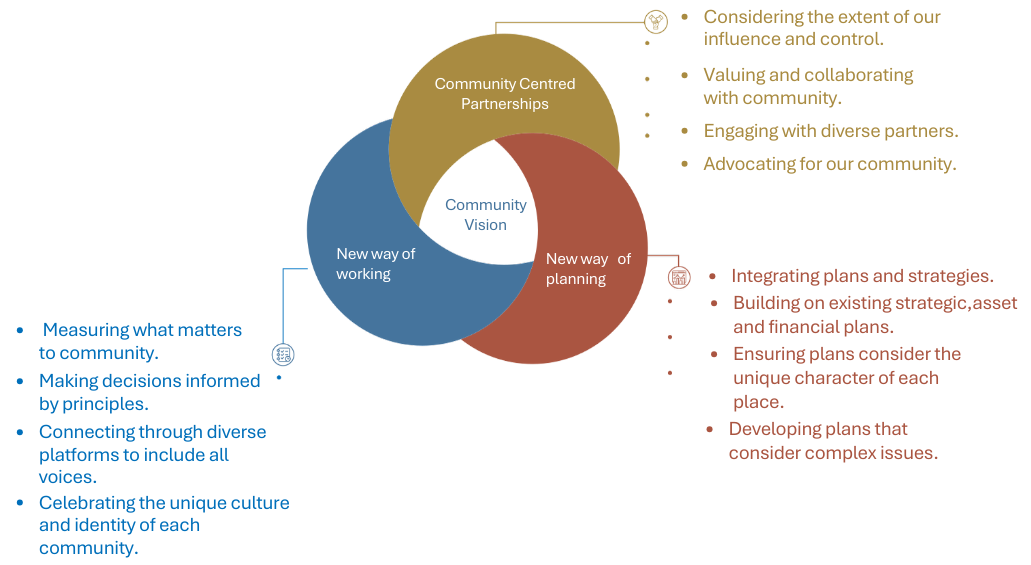
Future focussed decision-making principles embed our new way of working, guide new conversations and support liveability in the Huon Valley, now and into the future.
- Honour First Nations - Respect and incorporate the knowledge, traditions, and perspectives of Aboriginal peoples.
- Be Community-Centred - Place the needs, aspirations and vision of the community at the heart of all decisions.
- Align Plans and Strategies - Ensure that various plans and strategies are cohesive and mutually supportive.
- Collaborate Across Sectors - Work together with different sectors and groups to leverage diverse strengths and perspectives.
- Build Resilience - Develop strategies to withstand and recover from economic, social, and environmental challenges.
- Advocate for Partnerships - Foster partnerships with other organisations and partners to achieve common goals.
- Stay Engaged - Encourage active participation and collaboration among all residents in decision-making processes.
- Balance Actions - Consider social, economic, natural environment, built environment, and cultural capitals in decision-making.
- Be Contextual - Respect and enhance the unique characteristics and identity of the place.
- Maintain a Future Focus - Plan with a long-term perspective to ensure the community remains viable for future generations.
- Be Transparent - Maintain open, honest, and realistic communication with the community.
- Promote Inclusivity - Ensure that all community members, regardless of background, have equitable access to resources and opportunities.
- Protect the Natural Environment - Safeguard natural resources and promote conservation efforts.
- Follow Evidence-Based Practices - Base decisions on scientific evidence and research.
- Act Proactively - Take proactive measures to prevent harm and address issues boldly.
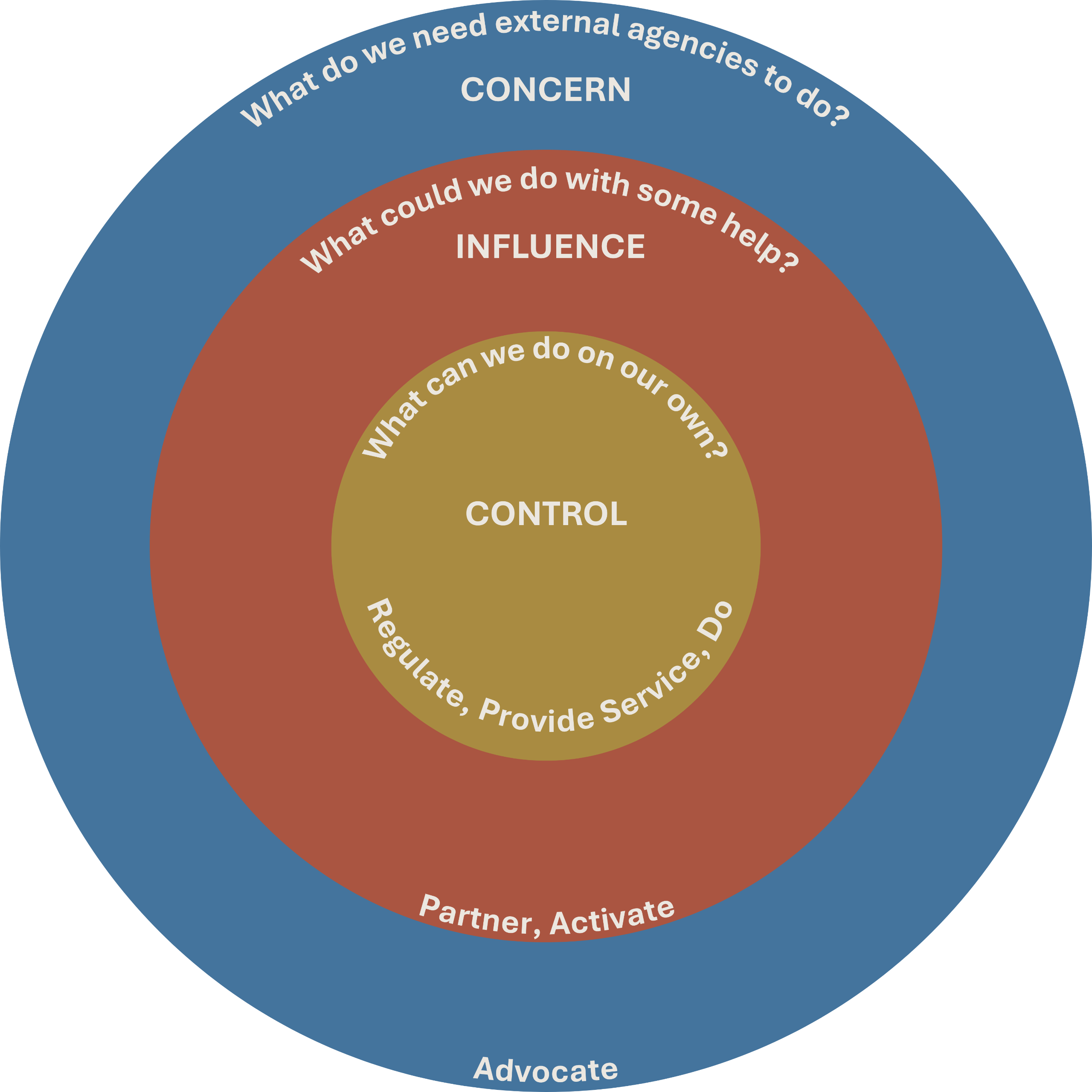
Complex issues like climate change, population growth and housing shortages, call for collaboration. With limited resources and competing priorities, Council recognises and compliments the strengths of our partners and communities, whilst planning and working within our sphere of control.
Control - What can Council do on their own?
Examples: regulate food safety, maintain local parks & reserves, maintain country roads, manage local waste...
Influence - What can Council help do through partnerships?
Examples: support bushfire preparedness, provide venues for community events and festivals...
Concern - What does Council need to advocate for?
Examples: advocate for youth mental health services, share community views and data with responsible others...
Focusing our energies, we can work together to make change!
The Huon Valley isn't just one place - it's a rich tapestry of distinct communities, each with its own character, challenges, and opportunities. From coastal villages to rural townships, mountain communities to regional centres, each area needs solutions that fit its unique context.
Place-based planning recognises this diversity while ensuring we're all working toward our shared vision for the Valley. Being community-centred means working alongside local communities rather than just consulting them and bringing together local knowledge with our expertise.
This approach differs from traditional community-driven planning by:
- Looking beyond immediate wants to consider long-term needs
- Ensuring local solutions align with our broader Valley-wide goals
- Bringing together different perspectives to find solutions
- Using data and evidence to support local decision-making
- Creating stronger connections between communities
- Enabling agile planning through targeted place-based plans
By focusing on places, we can develop plans that truly reflect and serve each community's needs while building a stronger, more connected Huon Valley.
We work with .informed decisions to conduct a 'Community Views' survey every 2 years. This helps us understand what our communities value and their experience of those things.
To learn more, check out the latest results here
The 16 elements contribute to liveable communities are listed below:
- A lack of road congestion
- A prosperous economy
- High quality education opportunities
- High quality health services
- A strong sense of community
- Access to the natural environment
- Making your way to/from services with ease
- Opportunity for all
- Affordable decent housing
- Cultural facilities e.g. museums, galleries, festivals
- Reliable and efficient public transport
- Shopping, leisure and dining experiences
- Feeling safe
- Good job prospects
- Social cohesion
- Sports and recreation
Our planning follows a clear hierarchy where each level builds on the one above, ensuring everything connects back to what the community wants for the Huon Valley’s future (the Community Vision). Check out Councils website for more detail.
To achieve this vision, Council recognises that we need to collaborate with others, especially for objectives that are outside of our sphere of control.
The different roles that Council can play include Regulator, Provider, Partner/Facilitator or Advocate.
While some objectives see Council acting as the service provider or regulator, there are many others where we can act as partners or advocates. This recognises that Council has certain strengths, and we can affect change through our sphere of control. but that sometimes the community, local business or other levels of government may be best placed to act. In these instances, Council’s role will be to partner, facilitate and advocate for appropriate actions from those responsible.